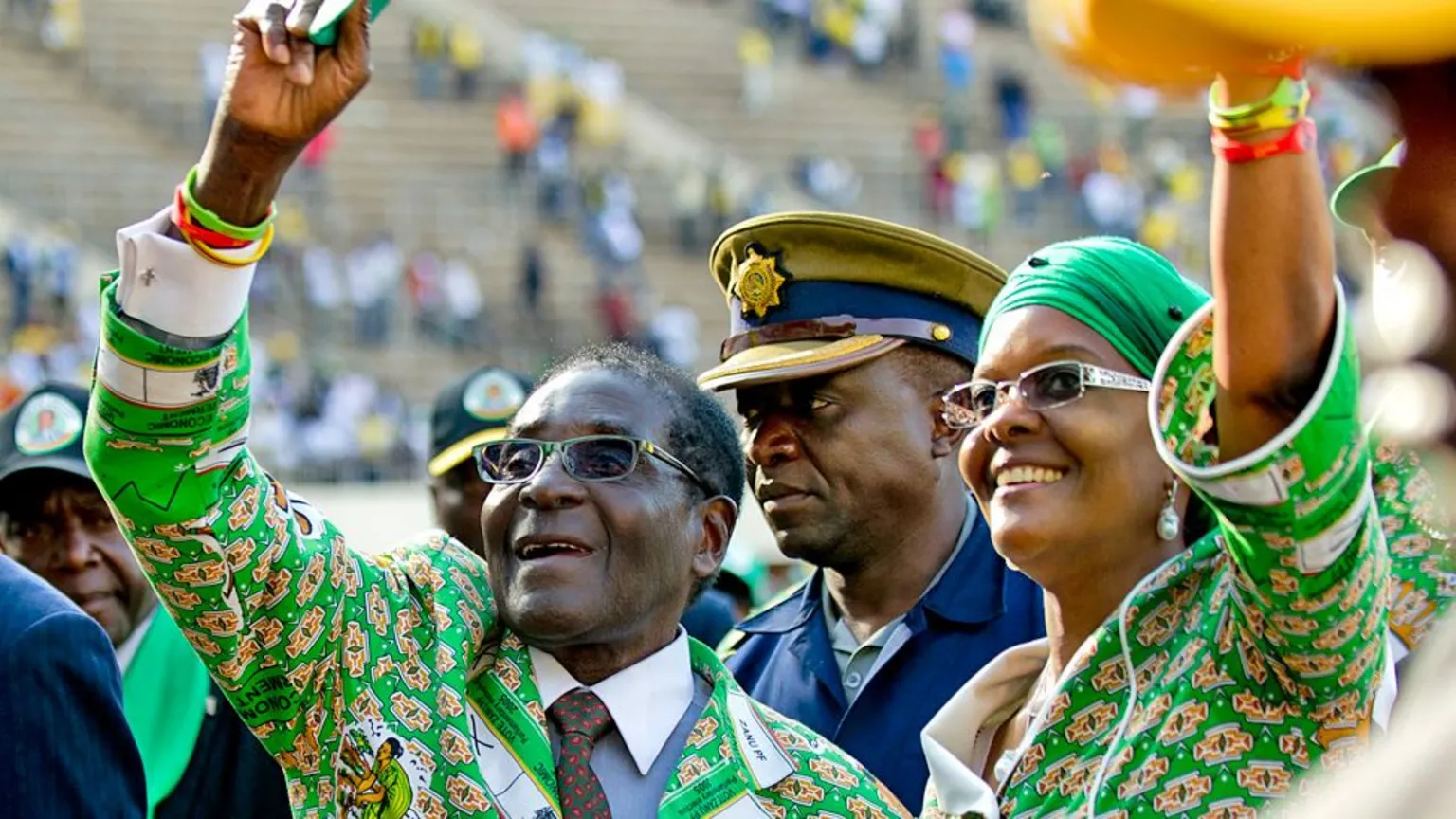
Newly released files tied to Jeffrey Epstein have brought Zimbabwe and its late President Robert Mugabe into focus, showing possible financial discussions involving the former leader, though there is no evidence of wrongdoing.
The documents reveal that Epstein considered ways to help Zimbabwe after its local currency collapsed, while other claims in the files remain unverified. These records are part of a broader release by the US Department of Justice covering the financier’s past dealings.
Emails from 2015 between Epstein and Japanese entrepreneur Joichi “Joi” Ito show the financier suggesting they approach Mugabe to assist with Zimbabwe’s currency crisis caused by hyperinflation.
In one exchange, Epstein described the country as a potential testing ground, saying: “No, but can easily get his attention, zimbabwe would be a great petrie dish, its also supposed to be beautiful.”
FBI documents from 2017 included unconfirmed information from a “human confidential source”, alleging Epstein acted as a wealth manager for Russia’s President Vladimir Putin and for Mugabe. These claims were not verified and are presented as unproven assertions within the files.
Being mentioned in the Epstein records does not imply criminal activity. The BBC has reached out to Mugabe’s family for comment on the claims appearing in the files.
Robert Mugabe, who led Zimbabwe to independence and governed the country for decades, passed away in September 2019 at age 95, two years after being removed from power in a military-led takeover.
Epstein, who faced US sex-trafficking charges, died by suicide in August 2019 while awaiting trial. He had earlier served a sentence in Florida after being convicted in 2008 for soliciting sex from a 14-year-old girl.
The newly released emails focus on conversations that occurred several years after Epstein’s 2008 conviction.
In one, Ito asked Epstein whether he knew Mugabe personally in relation to introducing a new currency, and Epstein replied: “No, but can easily get his attention, zimbabwe would be a great petrie dish, its also supposed to be beautiful.”
Ito resigned from his position as head of MIT’s Media Lab in September 2019 after the institution’s acceptance of donations from Epstein came under scrutiny. The BBC has also contacted the FBI for additional details on the recently released files, particularly regarding sanctions violations, as Mugabe had been barred from US financial dealings since 2003.
Several other emails in the files mention Mugabe and Zimbabwe. One message from April 2012, signed “jonathan”, incorrectly claimed Mugabe was on his death bed in Italy and asked Epstein for potential contacts in the country, noting “they have some great companies if this guy is really done with this”. At the time, Mugabe was 88 and returned from Singapore to attend independence celebrations in good health.
An anonymous former ally of Mugabe told the BBC that such inaccuracies suggested the information about him in the files was likely fabricated. Zimbabwe remains governed by Mugabe’s Zanu-PF party and has faced inflation challenges for years.
After abandoning the Zimbabwean dollar in 2009, efforts to stabilize the economy have continued, including the introduction of a gold-backed currency called the Zig two years ago, which has helped restore some stability though many citizens still rely on the US dollar.































Comments
Sign in with Google to comment, reply, and like comments.
Continue with Google